Spider-Noir Episode 1: Black & White vs. Color - Which Version Reigns Supreme?
Welcome back to the blog, folks! In our latest podcast episode, we dove headfirst into the gritty, rain-slicked streets of 1930s New York with the premiere of Spider-Noir. And as any true aficionado of the genre knows, visual presentation is paramount. This episode, like many noir classics, offered a choice: the stark, iconic black and white, or a more modern, vibrant color palette. We debated this very topic on the podcast, and today, we're expanding on those thoughts, dissecting the aesthetic choices and ultimately asking the crucial question: which version truly delivers the superior noir experience? For those of you who missed the episode, you can catch our full review and discussion of Spider-Noir Episode 1, along with our thoughts on The Mandalorian and Grogu movie, right here: Spider-Noir Episode 1 Review: This Noir Remix Works + Mandalorian and Grogu thoughts.
Black & White: The Classic Noir Aesthetic
When we think of film noir, the image that immediately springs to mind is black and white. It's more than just a lack of color; it's a deliberate artistic choice that imbues the genre with its signature mood and atmosphere. The absence of color forces our eyes to focus on light and shadow, on the stark contrasts that define the visual language of noir. Deep shadows conceal, revealing only what the director wants us to see, creating a sense of mystery, unease, and often, moral ambiguity. Every frame becomes a carefully constructed composition, a chiaroscuro masterpiece where the interplay of light and dark tells as much of a story as the dialogue.
In the context of Spider-Noir, the black and white version immediately taps into that rich history. It evokes the cinematic titans of the past – films like *The Maltese Falcon*, *Double Indemnity*, and *The Big Sleep*. The grimy, fog-laden streets of Depression-era New York feel more authentic, more tangible, when rendered in shades of gray. The harsh lighting on the faces of our characters accentuates their weariness, their desperation, and the burdens they carry. The glint of a fedora brim, the glint of a dangerous weapon, the flicker of neon signs – all are amplified in their starkness. This is the visual language that immediately signals "noir" to the audience, a shorthand for the genre's core themes of cynicism, fatalism, and the struggle against overwhelming odds.
The black and white aesthetic also has a way of simplifying the visual field, allowing the narrative and the performances to take center stage. Without the distraction of color, we are forced to pay closer attention to the subtle nuances of body language, the intensity of a stare, the flicker of an emotion across an actor's face. It creates a more intimate and focused viewing experience, drawing the viewer deeper into the psychological landscape of the characters. In essence, the black and white version of Spider-Noir is an homage, a loving recreation of the visual grammar that defined a cinematic era. It’s a choice that prioritizes tradition and the inherent power of silhouette and contrast.
Color: A Modern Noir Twist?
Then there's the color version. In the age of streaming, offering multiple viewing options is increasingly common, and for a show like Spider-Noir, it presents an interesting proposition. Could color enhance the noir experience, or would it dilute its essence? Proponents might argue that color can add a new layer of depth and texture. Perhaps certain colors could be used symbolically – a splash of crimson for danger or passion, a sickly green for decay or corruption. Color can also bring out details that might be lost in monochrome, making the production design, the costumes, and the urban environment feel more vibrant and alive. It can create a more immersive experience for viewers accustomed to the visual richness of contemporary cinema.
For *Spider-Noir*, the color version offers a way to bridge the gap between the classic noir sensibility and modern storytelling. It allows the filmmakers to inject a contemporary visual flair while still maintaining the core thematic elements of the genre. For example, a dingy, rain-soaked alleyway might still feel menacing in color, but the subtle hues of the decaying brickwork or the reflection of streetlights on wet pavement could add a different kind of atmosphere. The costumes, too, could benefit from color. The sharp lines of Ben Reilly's suit, the sultry attire of Cat Hardy – these elements gain a new dimension when rendered in their intended hues. It’s an approach that suggests that noir isn't just about shadows, but also about the specific shades of the world that characters inhabit.
However, the introduction of color also carries inherent risks for a genre so deeply rooted in its monochromatic past. The very essence of noir often lies in its stark contrasts and the ambiguity that black and white provides. Color can sometimes ground the viewer too much in reality, potentially diminishing the dreamlike, almost surreal quality that noir can possess. It might also inadvertently highlight elements that work against the noir aesthetic – a costume that looks too modern, a set that feels too clean. The success of the color version hinges on its ability to use color purposefully, as a tool to enhance the noir narrative, rather than simply applying it as a default.
Which Version Delivers a Superior Noir Experience?
This is the million-dollar question, and as is often the case, there isn't a single, definitive answer. The "superior" version ultimately depends on what the viewer is seeking from their noir experience. For purists, for those who crave the quintessential noir aesthetic, the black and white presentation of Spider-Noir Episode 1 is likely to be the undisputed champion. It’s a direct lineage to the films that shaped the genre, offering a visceral, atmospheric immersion that is unparalleled. The stark contrasts, the deep shadows, the very feel of classic cinema – these are the elements that define noir for many, and the black and white version delivers them in spades.
However, to dismiss the color version outright would be to ignore the potential for evolution and reinterpretation within the genre. If the filmmakers have employed color with intention, using it to underscore themes, enhance characterization, or simply to provide a more visually rich world, then it can offer a compelling alternative. It’s a way to experience the narrative with a different lens, one that acknowledges the contemporary audience while still respecting the foundational elements of noir. The podcast discussion highlighted this very point: the effectiveness of the color lies in its deliberate application. If it feels gratuitous or detracts from the mood, it fails. But if it serves the story, it can be a powerful tool.
On a personal level, when I want to immerse myself in the purest form of noir, the black and white version is my go-to. It’s an almost spiritual experience, connecting me to the cinematic masters of old. However, for a fresh take on the genre, a modern interpretation like Spider-Noir, I'm open to the possibilities that color can offer, provided it's handled with care and purpose. The key is to understand what each version is trying to achieve. Black and white offers a timeless, classic immersion. Color, when done right, offers a richer, potentially more nuanced contemporary experience. It’s a testament to the enduring power of the noir genre that it can be presented in ways that cater to both the traditionalist and the modernist.
Spider-Noir Episode 1: Key Plot Points and Characters (Ben Reilly, Cat Hardy, Sandman)
Before we delve deeper into the thematic implications, let's briefly touch upon the narrative foundations laid in the first episode. At its heart, Spider-Noir Episode 1 introduces us to Ben Reilly, portrayed with weary gravitas by Nicolas Cage. Unlike the Peter Parker we might be accustomed to, this Ben Reilly is a man haunted by loss, specifically the death of his fiancée, Ruby. Five years prior, he hung up his mask, a decision driven by grief and perhaps a sense of futility. The episode masterfully sets up his reluctant return to the world of crime-fighting, driven by the volatile landscape of Depression-era New York.
Stepping into this morally gray world is the enigmatic Cat Hardy, a clear nod to the iconic Black Cat. She serves as the femme fatale, a woman who is both alluring and dangerous, drawing Ben back into the fray with promises of information and perhaps something more. Her motivations are initially veiled, adding another layer of intrigue to the unfolding mystery. The episode also introduces Flint Marco, who will eventually become the Sandman. His presence here, in what appears to be his nascent stages, hints at the larger threats and supernatural elements that may plague this version of New York.
These characters are not just archetypes; they are integral to the noir tapestry. Ben’s struggle with his past and his identity as a hero, Cat’s manipulative charm, and Sandman’s burgeoning power all contribute to the intricate web of intrigue that defines the episode. The episode wisely avoids making Ben simply a 1930s Peter Parker, instead forging a distinct identity for him, one steeped in the conventions of noir while still retaining the essence of a spider-powered vigilante.
Thematic Deep Dive: Grief, Identity, and the Noir Hero's Journey
Beyond the stylistic choices and the plot mechanics, Spider-Noir Episode 1 delves into themes that are central to both the noir genre and the broader superhero narrative. The most prominent of these is grief. Ben Reilly’s decision to abandon his heroic persona is a direct consequence of the loss of Ruby. This isn’t just a plot device; it’s a deep exploration of how trauma can shape an individual, leading to withdrawal, self-imposed exile, and a profound questioning of purpose. The noir hero is often a man broken by the world, and Ben’s grief paints him as such, a man struggling to find meaning in a world that has taken so much from him.
Closely intertwined with grief is the theme of identity. Who is Ben Reilly when he's not Spider-Man? The quote highlighted in the show notes – "Am I an extraordinary man? Am I an ordinary man? I'm both, neither aren't we all?" – perfectly encapsulates this struggle. In the noir tradition, heroes often grapple with their dual nature, the respectable facade versus the darker impulses or the world-weary cynicism beneath. For Ben, this identity crisis is exacerbated by his personal tragedy. He’s not just fighting external villains; he’s battling his own internal demons, trying to reconcile the man he was with the man he has become, and the hero he might still be.
The noir hero’s journey is rarely a straightforward path to triumph. It’s a descent into the muck and mire, a confrontation with the worst of humanity and often, oneself. Ben Reilly’s arc in this episode embodies this. He’s pulled back into a dangerous world, not out of a desire for glory, but out of necessity, obligation, and perhaps a flickering ember of his former self. The broken spider-sense, a unique narrative device explored in the episode, further emphasizes this internal turmoil and the unreliability of his heroic instincts. It suggests that his connection to his powers, and perhaps to himself, is fractured, adding another layer of complexity to his hero’s journey. This is a hero who is not just fighting crime, but also fighting for his own soul.
The Broken Spider-Sense: A Unique Narrative Device
One of the most intriguing elements introduced in Spider-Noir Episode 1 is the concept of Ben Reilly's "broken spider-sense." In traditional Spider-Man lore, the spider-sense is an almost infallible precognitive ability, a tingling sensation that warns of impending danger. It’s a cornerstone of his heroic prowess, allowing him to evade attacks and anticipate threats. However, in *Spider-Noir*, this vital tool is compromised.
This narrative choice is not merely a gimmick; it has profound implications for both the character and the storytelling. A broken spider-sense immediately raises the stakes. Ben can no longer rely on this innate advantage to save him. He is more vulnerable, more human, and his triumphs, when they come, will be earned through sheer grit, intellect, and perhaps a touch of luck. This makes him a more compelling noir protagonist, as noir heroes are inherently flawed and operate under conditions of extreme disadvantage.
Furthermore, the broken spider-sense can be interpreted as a metaphor for Ben’s overall state of being. Just as his precognitive sense is fractured, so too is his sense of self, his connection to the world, and his ability to find solace. It could represent the lingering trauma from Ruby’s death, a psychic wound that manifests itself in his most crucial heroic ability. This unique twist allows Spider-Noir to explore new narrative avenues, forcing Ben to adapt and overcome in ways that a fully functioning spider-sense would not permit. It’s a bold choice that signals a willingness to deconstruct and reimagine familiar elements of the Spider-Man mythos, creating a distinct and compelling vision for this noir universe.
Concluding Thoughts: The Enduring Appeal of Spider-Noir
As we wrap up our deep dive into the visual and thematic landscape of Spider-Noir Episode 1, it’s clear that this series is poised to be a captivating addition to the superhero canon. Whether you choose to experience it in its classic black-and-white glory or its modern color iteration, the core of its appeal lies in its masterful blend of noir conventions and the enduring mythology of Spider-Man. The decision between black and white and color is not just about aesthetics; it’s about the very essence of what makes noir, noir.
The show’s commitment to exploring themes of grief, identity, and the arduous hero’s journey, coupled with innovative narrative devices like the broken spider-sense, suggests a rich and complex narrative ahead. Ben Reilly, portrayed by Nicolas Cage, is a compelling figure, burdened by his past yet still possessing the inherent drive to do what’s right, even if it means wading through the moral murk of a bygone era. Cat Hardy and the emerging Sandman promise to provide formidable challenges, both physically and emotionally.
Ultimately, the enduring appeal of *Spider-Noir* lies in its ability to reimagine a familiar hero within a richly atmospheric and thematically resonant genre. It’s a show that respects its roots while boldly forging its own path, offering a fresh perspective on what it means to be a hero in a world steeped in shadow and uncertainty. We’re excited to see where this story goes, and we hope you’ll join us for the ride, both on the podcast and in the dark, rain-slicked streets of this captivating new universe. Don't forget to tune into our next episode, where we'll be dissecting more of the latest in pop culture!
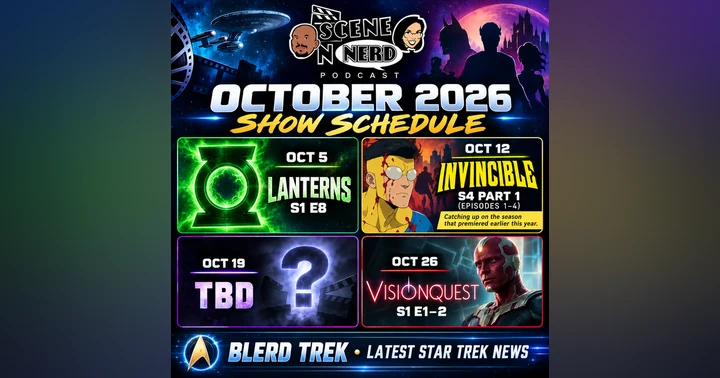
Scene N Nerd October 2026 Show Schedule