Consequence and Corruption: Navigating the Moral Grey of House of the Dragon
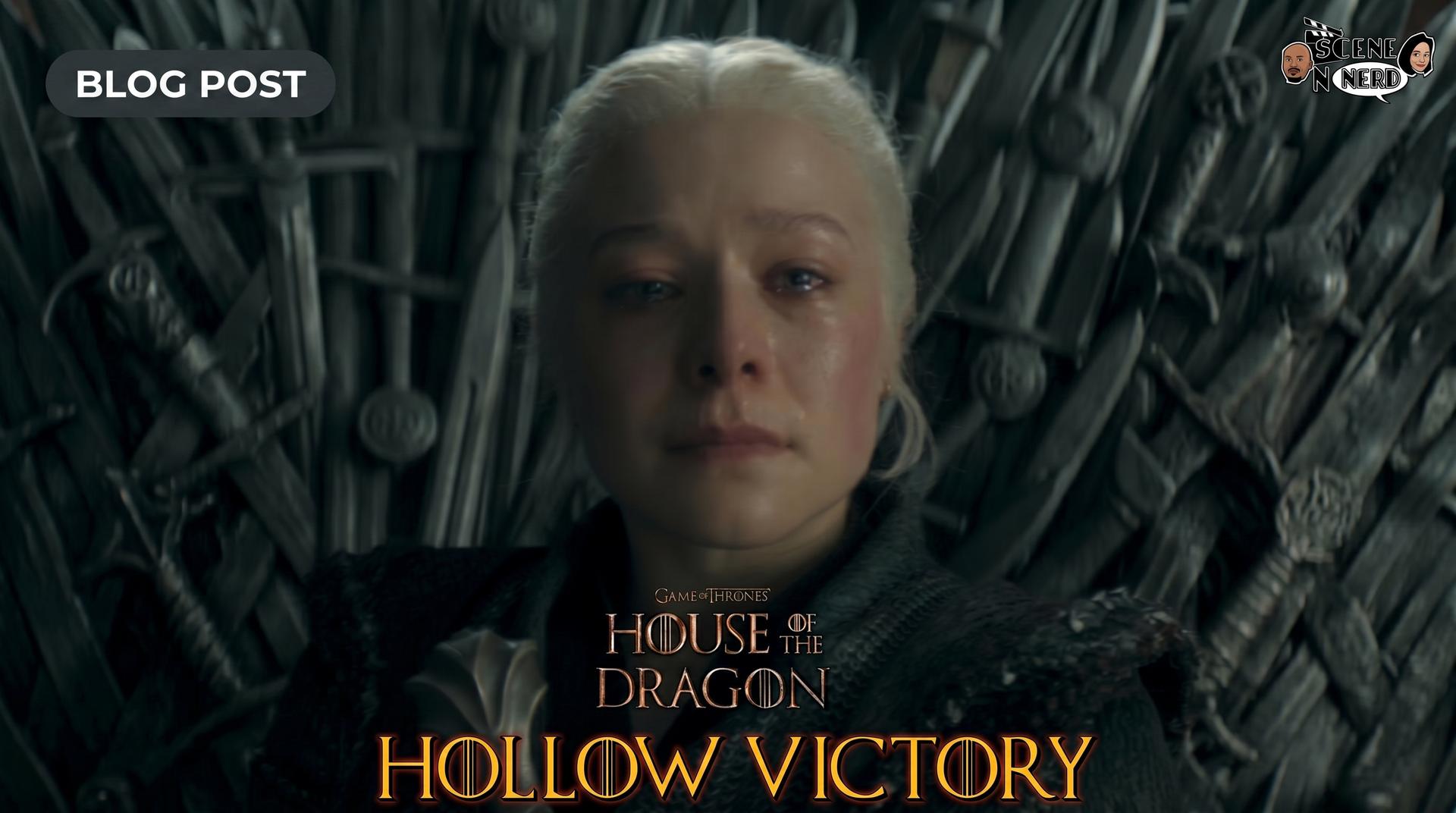
Welcome back to the blog, fellow travelers through the fiery history of Westeros! In our latest podcast episode, "BLOODY FOOTSTEPS: Rhaenyra Takes the Throne | House of the Dragon S3E2 Deep Dive," we delved deep into the increasingly dark and complex machinations of the Targaryen dynasty. As you heard Sarah and I dissect the brutal realities of Episode 2, a singular, potent theme emerged, staining every scene with a crimson hue: consequence. This blog post will serve as an expansion on that central idea, exploring how the decisions, both born of heart-wrenching grief and unbridled ambition, propel our characters towards unforeseen and often devastating outcomes. We'll navigate the murky moral waters within the Targaryen family and their viper's nest of a court, examining the choices that have led them to the precipice of civil war.
Grief as a Catalyst: The Weight of Loss
The Targaryen dynasty, for all its draconic might and inherent entitlement, is not immune to the most human of emotions: grief. In House of the Dragon, grief is not merely a passing sadness; it is a potent, corrosive force that reshapes characters and drives them to desperate acts. The return of Jace's body to Dragonstone in Episode 2 is a stark, visceral embodiment of this. It is a moment of the tangible representation of the losses that have already been endured and a chilling omen of those yet to come. This is not the stoic, internalized grief of a seasoned warrior; this is the raw, unadulterated anguish of a mother who has lost her child, and more tragically, a mother who has lost yet another heir to a cycle of violence and betrayal.
For Rhaenyra, this loss is not just a personal tragedy, but a political one of immense magnitude. Each child lost is a blow to her claim, a weakening of her lineage, and a potential justification for her rivals. The grief, therefore, is inextricably linked to her ambition and her survival. It fuels a desperate need to protect what remains, to solidify her position, and to ensure that the sacrifices already made – the deaths of her mother, her children – are not in vain. This grief, however, doesn't necessarily lead to noble or even rational decisions. Instead, it can fester, turning into a cold rage, a hardening of the heart, and a willingness to make choices that would have been unthinkable in more peaceful times. We see this in the raw fury that emanates from Rhaenyra, a queen pushed to the absolute brink, her grief a volatile fuel for the firestorm that is about to engulf Westeros.
Alicent, too, is consumed by grief, though hers is of a different, arguably more complex, nature. Her grief stems from the loss of her innocence, the betrayal of her father's influence, and the constant erosion of her own desires by the demands of the crown and her lineage. The encounter with Sir Jasper is laden with the weight of her lost hopes and the grim reality of her current predicament. Her grief is a constant companion, a reminder of the path not taken, the life she might have had, and the perceived injustices she has suffered. This, coupled with her deep-seated fear for her children's future, often manifests as a desperate, almost frantic, attempt to control the uncontrollable. She clings to her convictions, to her sense of duty and righteousness, even as the world around her crumbles. Her grief, like Rhaenyra's, becomes a catalyst, but one that drives her towards a fierce, protective aggression, often misdirected and ultimately destructive.
Ambition's Shadow: The Price of Power
While grief can be a powerful motivator, ambition is the ever-present shadow lurking in the halls of power, and the Targaryen court is a breeding ground for it. The pursuit of the Iron Throne, and the power it represents, corrupts even the noblest intentions. In "BLOODY FOOTSTEPS," we witness the calculated maneuvers of characters driven by the unyielding desire to ascend or to maintain their position. Daemon, ever the pragmatist, even in his pursuit of what he perceives as his due, embodies this ambition. His return from Harrenhal, shrouded in an aura of danger and strategic planning, signals a willingness to play the game of power with ruthless efficiency. His ambition isn't always overtly about sitting on the throne himself, but about securing his influence, his legacy, and his place within the Targaryen order, often by any means necessary.
Rhaenyra's own ambition, once a more reluctant burden thrust upon her, has been forged in the fires of adversity and loss. Her claim, though legitimate by law, is constantly under threat, and her ambition has evolved from a passive acceptance to an active, fierce determination to secure her birthright. This ambition, however, is now colored by the brutal realities she has faced. The "bloody footsteps" leading to the throne are not merely a symbolic image; they represent the actual cost of her ascent, the lives that have been sacrificed and the moral compromises that have been made, or will be made, in her name. The price of power, in Westeros, is rarely paid in gold; it is paid in blood, in broken trust, and in the erosion of one's own soul.
The ambition of those around the central figures also plays a crucial role. Characters like Otto Hightower, driven by his own deep-seated ambition for his family's legacy, manipulate events and individuals to further their own goals. His influence over Alicent, and his strategic maneuvering within the court, are testament to the corrupting nature of unchecked ambition. Even those who profess loyalty often harbor their own agendas, their own desires for advancement or security, contributing to the tangled web of deceit and manipulation that defines the Targaryen court. The pursuit of power in this era is a zero-sum game, where every gain for one is a loss for another, and the moral compass often spins wildly out of control.
The Unforeseen Harvest: Consequences of Rhaenyra's Ascent
The episode title itself, "BLOODY FOOTSTEPS," is a powerful metaphor for the immediate and ongoing consequences of Rhaenyra's ascension to the throne. What should have been a triumphant moment, a validation of her claim, is instead steeped in tragedy and violence. The act of taking the throne, even if legally justified, has ignited a powder keg. The decision to proceed with her coronation, despite the immense personal cost and the surrounding turmoil, has set in motion a chain of events that will undoubtedly lead to widespread bloodshed. The "unforeseen harvest" of Rhaenyra's ambition and the circumstances surrounding her claim are already beginning to ripen, and the fruits are bitter and deadly.
The return of Jace's body is the most potent symbol of these consequences. It is a direct result of the political instability and the dangers that Rhaenyra's claim, and the ensuing conflict, have unleashed upon her family. The very act of asserting her power has inadvertently placed her loved ones in greater peril. This is the core of the consequence theme: every action, especially those taken in the pursuit of power or in response to unbearable loss, has a ripple effect, often far more devastating than the initial act itself. Rhaenyra's ascent is not a clean victory; it is a bloody inauguration, a testament to the fact that in the game of thrones, there are no easy wins, only different shades of ruin.
Furthermore, the consequences extend beyond the immediate Targaryen family. The realm itself will bear the brunt of this internal conflict. The lords and common folk will suffer the devastation of war, the loss of life, and the erosion of stability. Rhaenyra's decisions, born from her grief and her ambition, will shape the destiny of Westeros for generations to come, and the harvest of these choices will be reaped by all. The episode powerfully illustrates that the pursuit of power, especially when entangled with personal tragedy, rarely leads to a clear or triumphant outcome; instead, it cultivates a future fraught with the seeds of destruction.
Moral Ambiguity in the Dragon's Den
One of the most compelling aspects of House of the Dragon, and a theme we heavily explored in our latest podcast, is the profound moral ambiguity that permeates the Targaryen court. There are no clear-cut heroes or villains here; instead, we are presented with deeply flawed individuals making impossibly difficult choices in an unforgiving world. This is particularly evident in the interactions and internal struggles of the central female characters, Alicent Hightower and Rhaenyra Targaryen.
Alicent's actions, often perceived as antagonistic towards Rhaenyra, are rarely driven by pure malice. Instead, they are born from a deeply ingrained sense of duty, a fervent religious conviction, and a desperate desire to protect her children and uphold what she believes to be the rightful order. Her "green" faction, while often appearing ruthless, sees themselves as the guardians of tradition and the true lineage. Her agonizing encounters, like the one with Sir Jasper, highlight the internal conflict she faces, the constant pressure to conform to expectations and to make choices that align with her perceived moral compass, even when those choices lead to pain and suffering.
Similarly, Rhaenyra, while fighting for her birthright, is not without her own moral complexities. Her decisions, particularly in the wake of her son's death, are driven by a primal urge for justice and retribution. The "bloody footsteps" are a testament to the dark path she is now treading, a path that necessitates morally questionable actions to secure her future and avenge her losses. The question of whether her claim justifies the ensuing violence, or whether her actions are a descent into tyranny, is a central point of debate and a hallmark of the show's commitment to exploring the shades of grey.
Even characters like Daemon, who often operates outside conventional morality, present a complex tapestry of motivations. His pragmatism and willingness to engage in ruthless tactics are often framed within a protective instinct towards his family and a desire for his own form of justice. The moral landscape of the Targaryen court is not a simple black and white; it is a churning vortex of conflicting loyalties, personal desires, and perceived obligations, where every action is open to interpretation and every decision carries a heavy moral cost.
Conclusion: The Bleeding Legacy of the Targaryens
As we wrap up this deeper dive into the themes of consequence and corruption, it's clear that House of the Dragon is not shy about exploring the darkest corners of human nature and the devastating repercussions of ambition fueled by grief. The crimson stain on the Iron Throne, as we discussed in our latest podcast episode, "BLOODY FOOTSTEPS: Rhaenyra Takes the Throne | House of the Dragon S3E2 Deep Dive," is a metaphor that resonates throughout every scene. The choices made by Rhaenyra, Alicent, Daemon, and the entire Targaryen court are not isolated incidents; they are threads in a tapestry of destruction, each decision weaving a tighter knot of conflict and suffering.
The legacy of the Targaryens is not one of unparalleled glory and dominion, but a bleeding legacy, a testament to the fact that power, unchecked by wisdom and tempered by empathy, inevitably leads to ruin. The episode powerfully illustrates that even the most legitimate claims to power are fraught with peril, and the pursuit of it often demands a descent into moral compromise. The agony of Alicent, the calculation of Daemon, and the tragic ascent of Rhaenyra all contribute to this ongoing narrative of a dynasty tearing itself apart. The "bloody footsteps" are not just a visual motif; they are a prophecy, a stark reminder that the path to the throne is paved with the sacrifices of the innocent and the corrupted souls of those who seek it. We hope this blog post has offered some further food for thought on the complex moral landscape of Westeros. Until next time, keep your dragons close and your enemies closer!

Happy International Podcast Day