House of the Dragon Seasons 1 and 2: Our Non-Reader Thoughts Before Season 3
As we get ready to return to Westeros for House of the Dragon Season 3, it feels like the right time to look back at where the series has taken us so far. We have reviewed and discussed House of the Dragon as viewers who have watched Game of Thrones, but have not read the source material. That matters because our perspective is not about comparing every moment to Fire & Blood. We are watching the show as television first: character arcs, pacing, emotional payoffs, political tension, and how well this prequel stands on its own while still living in the shadow of Game of Thrones.
Through the first two seasons, House of the Dragon has been at its best when it remembers that dragons are not the story. They are the consequence.
Season 1: A Family Tragedy Before a War Story
Season 1 worked for us because it was not simply a setup for war. It was a slow, messy, painful family drama about succession, resentment, grief, and how small choices can become generational disasters.
The early episodes had the difficult job of pulling viewers back into Westeros without just giving us Game of Thrones again. The show leaned into court politics, family fractures, and the burden of legacy. King Viserys became the emotional center of that first season, and by the end, his attempt to hold the family together felt both noble and doomed. His love for Rhaenyra, his guilt, his denial, and his refusal to fully confront the damage inside his own house made the coming war feel unavoidable.
For us, Season 1 was strongest when it focused on the personal cost of power. Rhaenyra was not just “the rightful heir.” She was someone trying to survive a system that was never truly built to accept her. Alicent was not just “the villain.” She was a woman shaped by duty, fear, religion, and the political machine around her. Their relationship gave the first season its emotional tension, especially because the show framed the conflict as something more tragic than simple good versus evil.
The time jumps were a challenge. They helped move the story forward, but they also sometimes made us feel like we were catching up to emotional developments after they had already happened. Still, Season 1 succeeded because the tension kept building. By the finale, the death of Lucerys changed the story. This was no longer a dispute over succession. This was grief becoming war.
Season 2: Great Character Work, But a Slower March Than Expected
Season 2 had a different job. After the Season 1 finale, the expectation was clear: the Dance of the Dragons was here. The premiere brought us back into the world with strong atmosphere, Winterfell connections, and a useful reminder that this conflict was expanding beyond the Targaryens. We appreciated that because Season 1 was so focused on one family that Season 2 needed to show how the rest of Westeros would be pulled into their fire.
But Season 2 also became a season of tension between setup and payoff.
There were moments we really liked. The fallout from Blood and Cheese showed how quickly both sides could lose moral clarity. Team Green’s political maneuvering, Aegon’s impulsive leadership, Alicent’s struggles as a mother, and the way the smallfolk started to matter more all gave the season texture. On Team Black, the fracture between Rhaenyra and Daemon gave us some of the season’s best emotional conflict. Their confrontation reminded us that being on the same side does not mean sharing the same vision.
Daemon’s Harrenhal arc was also one of the more interesting swings of the season. The visions, the guilt, and the way the show forced him to sit with his past gave Matt Smith a lot to play. At times, though, it also felt like the season was holding Daemon in place while the rest of the board moved around him. The idea was strong. The atmosphere was strong. But we were ready for that internal journey to reconnect with the main conflict sooner.
Then there was Rook’s Rest. That episode delivered the kind of dragon tragedy the show had been warning us about from the beginning. It was not just spectacle. It was horror, ambition, miscalculation, and family violence all crashing together. Aegon’s fall, Aemond’s choices, and Rhaenys’ final stand gave the season the fire and consequence we had been waiting for.
The season also did strong work with Aegon and Aemond. Aegon is a terrible king, but the show found ways to make him pathetic, tragic, insecure, and dangerous all at once. Aemond, meanwhile, looks more capable on paper, but his pride and cruelty make him just as terrifying. Their brother dynamic became one of the most compelling parts of Season 2 because it echoed some of what we saw with Viserys and Daemon in Season 1: the overlooked brother, the reckless brother, the brother who believes he should matter more.
That is exactly why we want more of Aegon and Aemond in Season 3. Their relationship cannot just be background tension. It should be one of the engines of the story.
The Season 2 Finale: Setup, Frustration, and Promise
Our reaction to the Season 2 finale was mixed. Will appreciated the setup and the sense that the board was finally in place. Sarah was more frustrated by the pacing, the montage structure, and the feeling that the season ended right before the thing we had been building toward.
Both reactions can be true.
The finale did position the story for something massive. Rhaenyra was ready to act. Daemon’s arc seemed to bring him back into alignment with the larger war. Alicent’s shifting role complicated everything. The dragonseeds changed Team Black’s power. Team Green was wounded but not finished. The realm was ready to burn.
But after a season that often asked us to wait, ending with more waiting was frustrating. Season 2 had strong character work, but it sometimes lacked the tension Season 1 carried so well. The show kept telling us war was coming. By the finale, we needed to feel that war fully arrive.
What We Hope to See in Season 3
The biggest thing Season 3 has to deliver is momentum. We do not need nonstop action, but we do need consequences that feel immediate. The Battle of the Gullet has been built up as the major event fans have been waiting for, and from our non-reader perspective, it needs to do more than look expensive. It needs to matter emotionally.
We want the Battle of the Gullet to hurt. We want it to change alliances, break people, expose bad leadership, and remind us that dragons and fleets are not just cool visuals. They are weapons that destroy families, cities, and futures.
We also want Daemon’s return to feel earned. Season 2 took him through a psychological reckoning. Now Season 3 needs to show what that reckoning means. Is he truly loyal to Rhaenyra? Has he changed, or has he simply accepted his role in a larger destiny? Daemon is most interesting when we are not fully sure whether he is a weapon, a partner, a liability, or all three at once.
Aegon and Aemond also need to be front and center. Aegon has been physically and emotionally shattered, while Aemond has stepped into power with the confidence of someone who believes he was always the better choice. That brother relationship is loaded with resentment, humiliation, ambition, and family trauma. If Season 3 leans into that, Team Green could become even more fascinating.
For Rhaenyra, we want to see leadership under pressure. It is one thing to claim the throne. It is another to rule through fear, grief, compromise, and bloodshed. Season 3 should challenge her not just as a claimant, but as someone who has to decide what kind of ruler she is becoming.
For Alicent, we want clarity. Her Season 2 journey was complicated, but Season 3 needs to give her choices weight. She cannot simply be trapped between regret and survival forever. She needs agency, even if every option available to her is terrible.
Building Toward the Final Season
Now that we know the series is building toward its final stretch, Season 3 has a huge responsibility. It cannot just be the season with bigger battles. It has to be the season that makes the ending feel inevitable.
The best parts of House of the Dragon have always been about how power poisons love. Viserys loved his family but failed to protect them from each other. Rhaenyra and Alicent loved each other once, but history, patriarchy, fear, and ambition turned that bond into a battlefield. Daemon loves in ways that are possessive, violent, and unstable. Aegon and Aemond are brothers, but their relationship may be more dangerous than any enemy army.
That is what makes this series work for us. It is not just dragons fighting dragons. It is a family destroying itself while the rest of the realm pays the price.
So as non-readers, we are going into Season 3 excited, cautious, and ready to see if the show can turn all this setup into the kind of emotional, political, and fiery payoff it has been promising since Season 1.
Bring on the Battle of the Gullet. Bring on Daemon’s return. Bring on the Aegon and Aemond fallout. And most importantly, bring on the consequences.
Because in Westeros, the fire is never just fire. It is legacy, grief, power, and the beginning of the end.
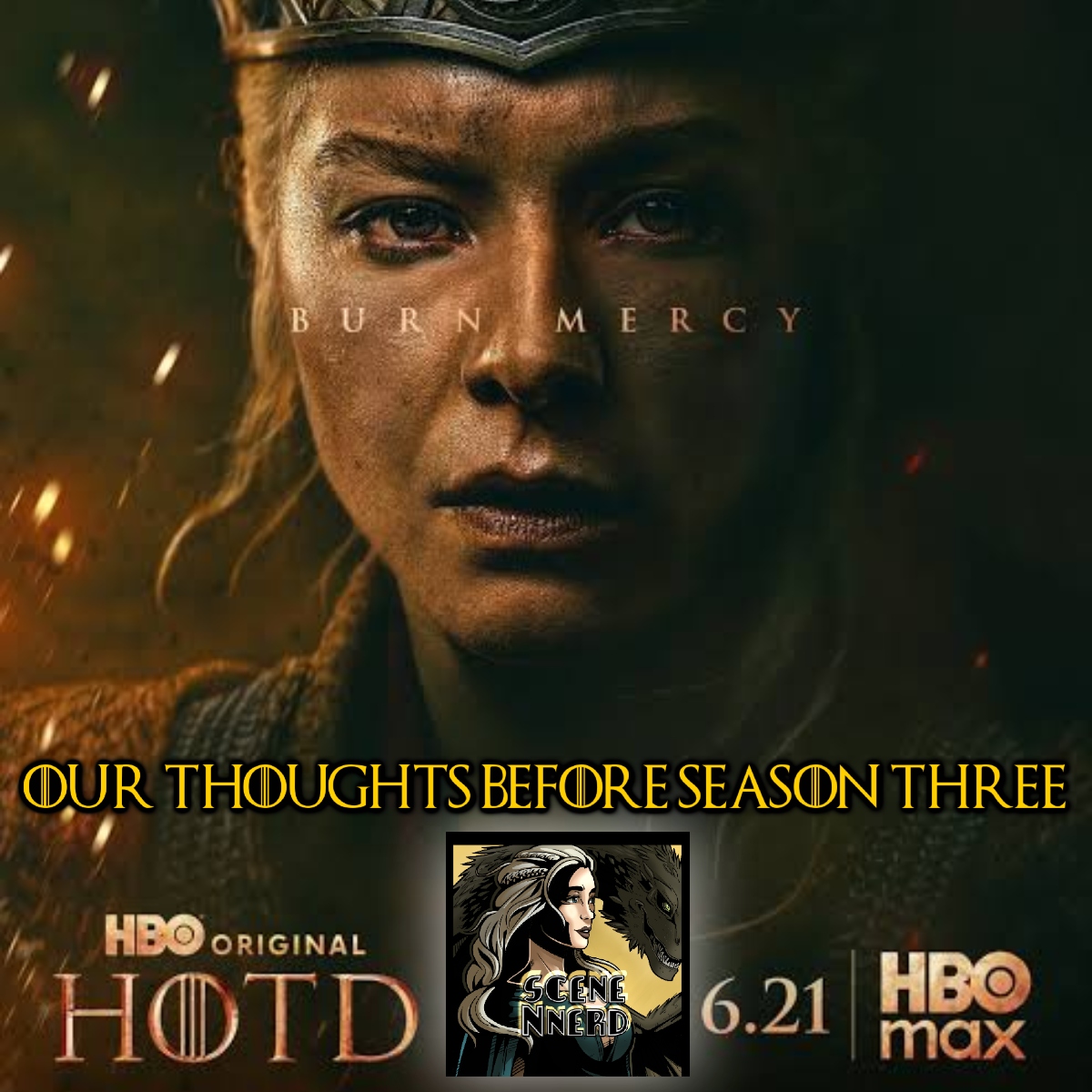
House of the Dragon Returns Season 3 returns for eight episodes starting June 21, 2026. Be sure to also catch our A Knight of the Seven Kingdoms reviews (Will did read the novella) here on our website: www.scenennerdpodcast.com

Happy Star Trek Day!!!